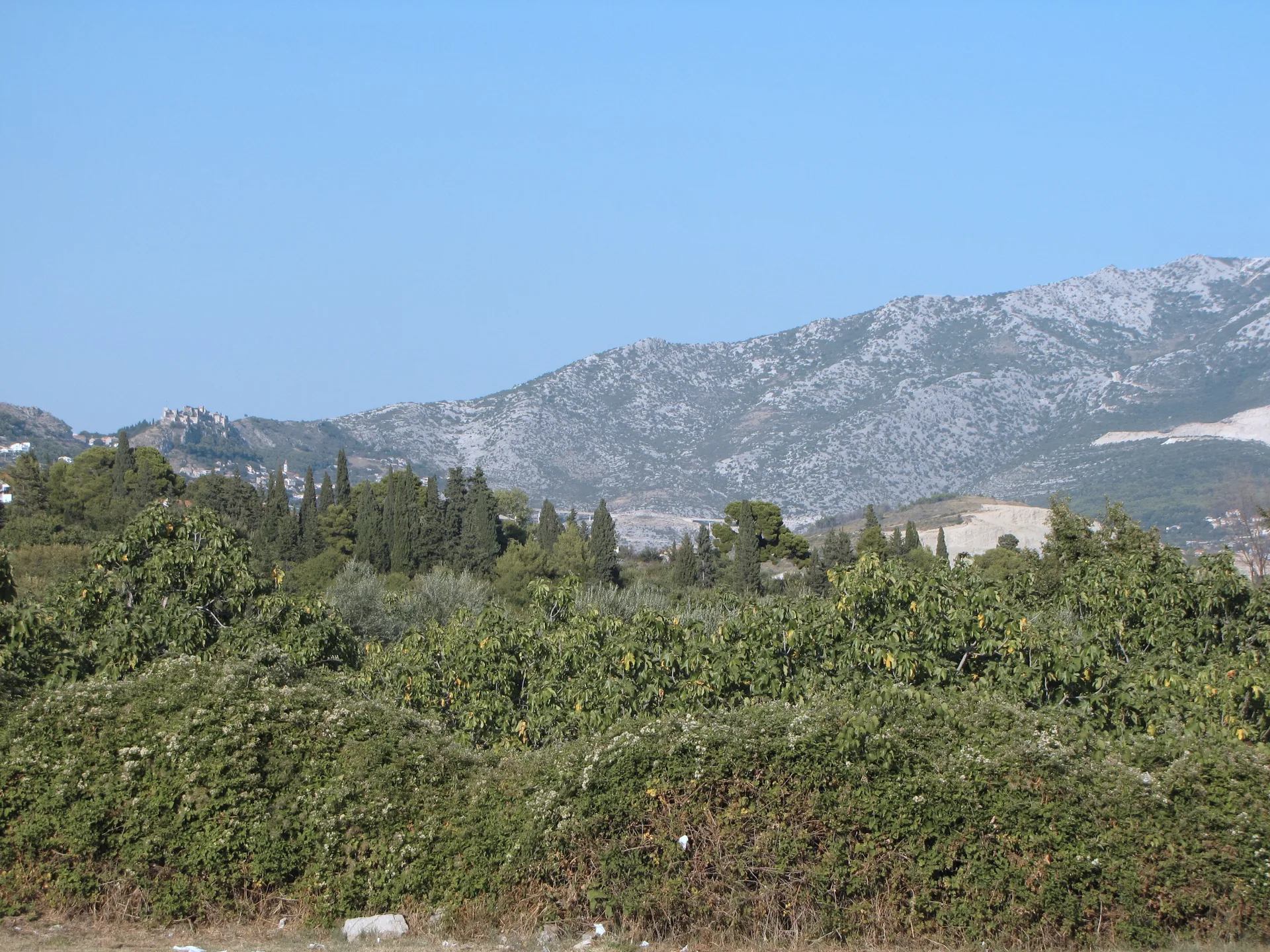
Why visit Salona
Why visit Salona
The capital behind Diocletian's Palace
Everyone visits Diocletian's Palace in Split, but Salona is where the story really starts: this was the Roman capital of Dalmatia, a city of tens of thousands, and the birthplace of the emperor who built that palace as his retirement retreat six kilometres away. Walking Salona's ruins fills in the context that Split's old town leaves out.
A city, not a monument
Where many Roman sites are a single standout ruin, Salona is a genuine cityscape: an amphitheatre that once held 15,000–18,000 spectators, roughly four kilometres of walls with some 90 towers, a forum, baths and an aqueduct that supplied around 40,000 residents. It's the largest archaeological park in Croatia.
Where early Christianity took root
At Manastirine, just outside the old walls, an early-Christian basilica and cemetery mark the burial place of Saint Domnius, martyred in 304 AD — among the oldest Christian holy sites in the region, and a quiet, evocative counterpoint to the Roman ruins nearby.
What to see at Salona
What to see at Salona
Salona's ruins are spread across open fields rather than a single fenced monument. These are the things to look for as you go.
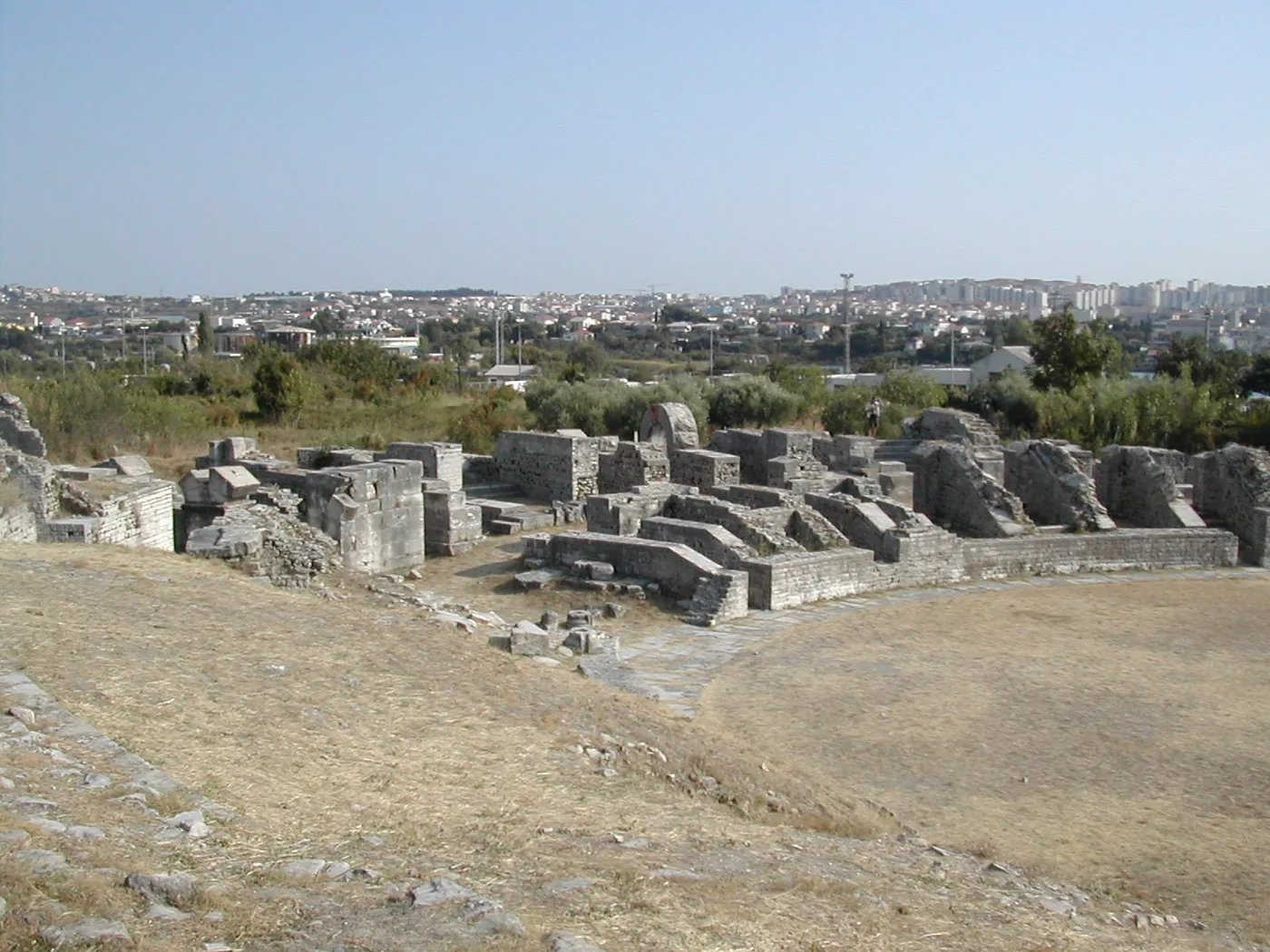
- Amphitheatre
The battered arena
Salona's amphitheatre once seated 15,000 to 18,000 people — smaller and quieter than Split's crowds, but a real sense of the city's scale survives in its worn stone tiers.
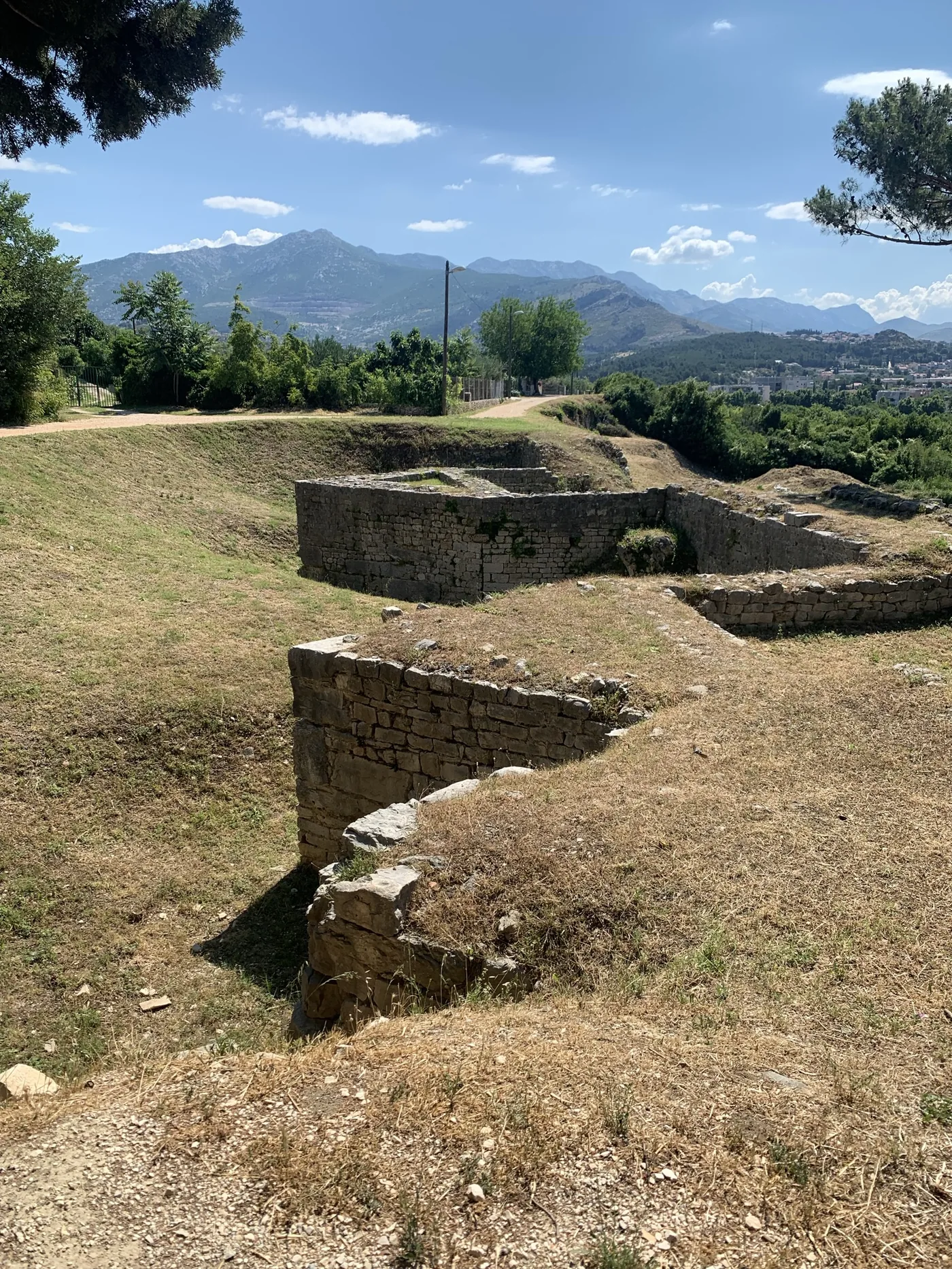
- City walls
Four kilometres of defences
Stretches of Salona's roughly 4 km of fortifications, once studded with about 90 towers, still trace the edge of the ancient city across the fields.
- The forum
The civic heart
The 45-by-70-metre forum was the centre of Salona's public and political life — shops, temples and civic buildings once ringed this open square.
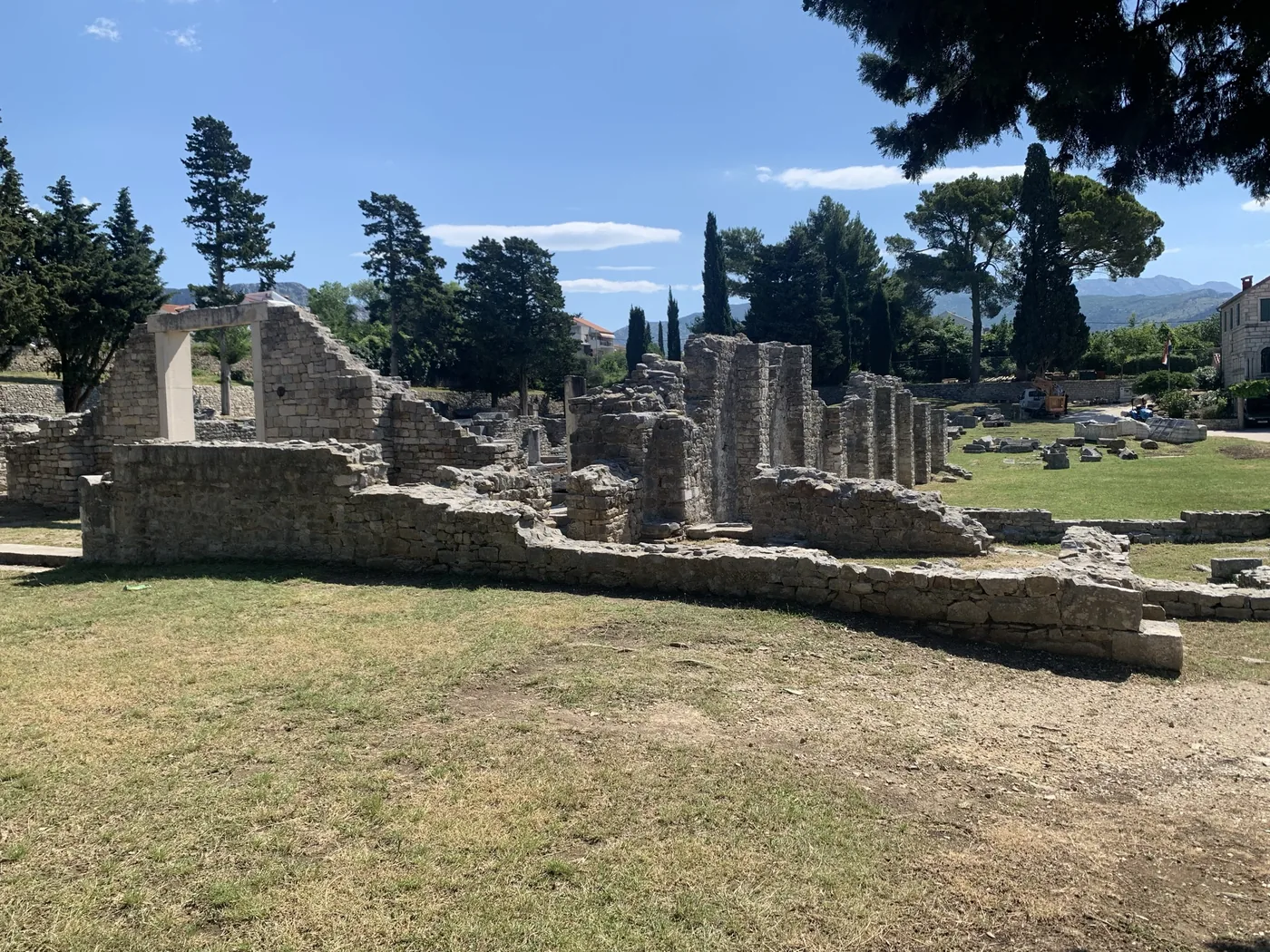
- Manastirine
The early-Christian necropolis
A basilica and cemetery outside the walls where Saint Domnius was buried after his martyrdom in 304 AD — one of the earliest Christian sites in the region.
- Baths & aqueduct
Roman infrastructure
Traces of Salona's bathhouses and the 3,850-metre aqueduct that once supplied around 40,000 residents hint at the comforts of a proper provincial capital.
- Diocletian's birthplace
The emperor's home city
Diocletian was born here, and after abdicating in 305 AD he retired to the palace he built at Split, six kilometres away — the two sites are best understood together.
Visiting from Split
Visiting from Split
Salona sits just outside modern Solin, close enough to Split for a half-day visit — here's how it works.
A short trip from Split
Salona is only about 15–20 minutes from central Split, so it's easy to combine with a morning or afternoon in Diocletian's Palace, or with a fuller day trip to Trogir and Klis Fortress.
Often part of a bigger day
Most bookable tours pair Salona with Split's Diocletian's Palace and either Klis Fortress or the UNESCO town of Trogir, giving you Roman, medieval and Venetian Dalmatia in one outing.
What tours include
Options range from short small-group walking tours of Salona alone to full-day combination tours with transport, a guide and entrance fees bundled in. Check exactly what your chosen option includes when you book.
On site
The site is open and spacious — spread across fields rather than a compact fenced ruin — so wear comfortable shoes and bring sun protection, especially in summer.
Salona, in pictures
Salona, in pictures
The amphitheatre, city walls and the Manastirine necropolis at Salona, near Split.
Tour options & what's included
Tour options & what's included
| Option | What it includes | Good to know |
|---|---|---|
| Split, Salona & Klis Fortress | Transport, guide, entrances, small group | Top-rated way to see all three in one day |
| Trogir, Salona & Klis sunset tour | Full-day route with UNESCO Trogir added | The most-booked Salona day trip |
| Salona walking tour | Local guide, Salona only, 1–2 hours | Best if you just want the ruins |
| Private / historian-led tour | Your own guide and pace, deeper history | Flexible; the priciest option |
Ways to visit Salona
Find a Salona tour for your dates
Every option below is bookable through GetYourGuide, with live availability and the final price shown in your own currency before you pay.
Planning your visit
Planning your visit
Pair it with Split
Salona rewards context from Diocletian's Palace — visiting both on the same day (or as a combined tour) makes Diocletian's story, and Salona's, click into place.
Wear sturdy shoes
The site is open, spread-out fields rather than a single compact ruin — comfortable walking shoes and sun protection make the visit easier, especially in summer.
Don't skip Manastirine
It's easy to focus on the amphitheatre and walls and miss the early-Christian necropolis — ask your guide to route past it if it isn't automatically included.
Go with a guide for the fuller story
Salona's ruins are spread out and lightly signed; a guide connects the amphitheatre, forum and Manastirine into one coherent story of the city and its most famous son.
Booking flexibility
Listings typically offer free cancellation up to 24 hours before, so you can lock in a departure and adjust later if your Split plans change.
Planning a Salona visit from Split
Planning a Salona visit from Split
GEO/FAQ
Salona visit questions
What is Salona?
Salona was the Roman capital of the province of Dalmatia, near modern Split, Croatia. Founded in the 3rd century BC, it grew into one of the largest cities of the late Roman Balkans — home to an estimated 40,000-plus residents — and was the birthplace of Emperor Diocletian. It was sacked during Avar and Slavic invasions in the early 7th century and largely abandoned; refugees helped found what became Split.
How is Salona connected to Diocletian's Palace?
Diocletian was born in Salona, and after retiring as emperor in 305 AD he built his palace about six kilometres away at what is now Split's old town. Many visitors see both on the same day — Salona shows where Diocletian came from, and Split shows where he retired.
How do I get there from Split?
Salona is only about 15–20 minutes from central Split, near the town of Solin. It's easy to combine with a morning or afternoon in Diocletian's Palace, or as part of a fuller day trip to Trogir and Klis Fortress.
Is it worth visiting?
If you're interested in Roman history, yes — Salona is the largest archaeological park in Croatia, with an amphitheatre, roughly four kilometres of city walls, the forum, and the early-Christian Manastirine necropolis. It's also usually much quieter than Diocletian's Palace.
What will I see there?
The highlights are the amphitheatre, stretches of the Roman city walls, the forum, and the Manastirine necropolis and early-Christian basilica where Saint Domnius was buried. The site is open fields rather than a single fenced monument, so plan to walk.
Can I combine Salona with other sites?
Yes — the most popular bookable tours combine Salona with Diocletian's Palace and either Klis Fortress or the UNESCO town of Trogir. Each option's inclusions and live price are shown in the booking widget.
Still deciding which Salona tour, or which day?
Leave your email and roughly when you're travelling — we'll send a short rundown of how the Salona tours from Split compare, what's included, and how it fits with Diocletian's Palace and Klis.